
We depend on people who connect the dots. But what about the people who notice the dots in the first place?
When I first earned my MBTI® certification, my instructor made an observation that stuck with me: people with a preference for Sensing tend to be underrepresented in the talent development field.
I thought that was interesting at the time. But looking back on more than 20 years of helping individuals and teams learn and grow, I've come to appreciate just how much my own Sensing preference has shaped the way I work.
In fact, some of the things I do most naturally have turned out to be my greatest professional strengths.
My Sensing Superpowers, if you will.
And I wonder if we sometimes overlook those strengths in a field that puts so much emphasis on big-picture thinking.

We Love a Visionary. But What About a Noticer?
In leadership and talent development, we talk a lot about innovation, strategy, seeing possibilities, and connecting ideas.
Those qualities are often associated with a preference for Intuition (N) in the Myers-Briggs framework. People who prefer Intuition tend to focus first on patterns, possibilities, and what might come next.
People who prefer Sensing (S) tend to focus more naturally on what's observable, what's happening here and now, and what they've learned through experience.
Neither preference is better, and neither limits what someone can do. But they do offer different ways of taking in information.
I've found that my Sensing preference is especially valuable when I'm facilitating a workshop or coaching a leader. I notice all the things:
How someone approaches a problem.
Whether they ask questions before jumping into solutions.
Who thinks out loud and who needs time to reflect.
Where communication flows easily and where it starts to break down.
I also remember details:
Something someone shared in an earlier conversation.
An example they used.
A concern they raised that seemed small at the time.
And often, those details become useful later.
I might bring an earlier observation back into a conversation, helping someone recognize a pattern in their own behavior or better understand a colleague.
Sometimes, that's the moment something clicks.
The insight isn't always something new. Sometimes it's something we've already seen but haven't quite connected yet.
Details Are Strategic, Too
There's a tendency to associate Intuition with vision and strategy, while Sensing gets linked to details and implementation. But I think that sells Sensing short.
Imagine a leadership team working on improving collaboration.
Someone with a preference for Intuition might help the team imagine a completely different way of working or recognize opportunities they hadn't considered.
Someone with a preference for Sensing might ask:
What's actually happening in our meetings?
Where are people getting stuck?
What have we tried before?
What's working that we should build on?
What would need to change in our day-to-day interactions?
Those aren't just practical questions. They're strategic ones.
A great vision matters. But so does understanding the reality you're starting from.
And the best solutions usually need both.
Seeing the People Behind the Patterns
One of my favorite parts of facilitating is watching people begin to see one another differently.
Maybe someone has been labeled resistant to change, when they're really trying to understand how a new idea will work.
Or a colleague who seems to go off on tangents is actually helping the team consider possibilities they hadn't thought of.
My Sensing preference helps me catch and illuminate these moments as they happen.
I remember how someone approached an earlier exercise or recognize when a communication habit shows up again.
That lets me connect the concepts we're discussing to something the group has actually experienced.
Remember what happened during that first activity? Let's look at how it connects to what you're talking about now.
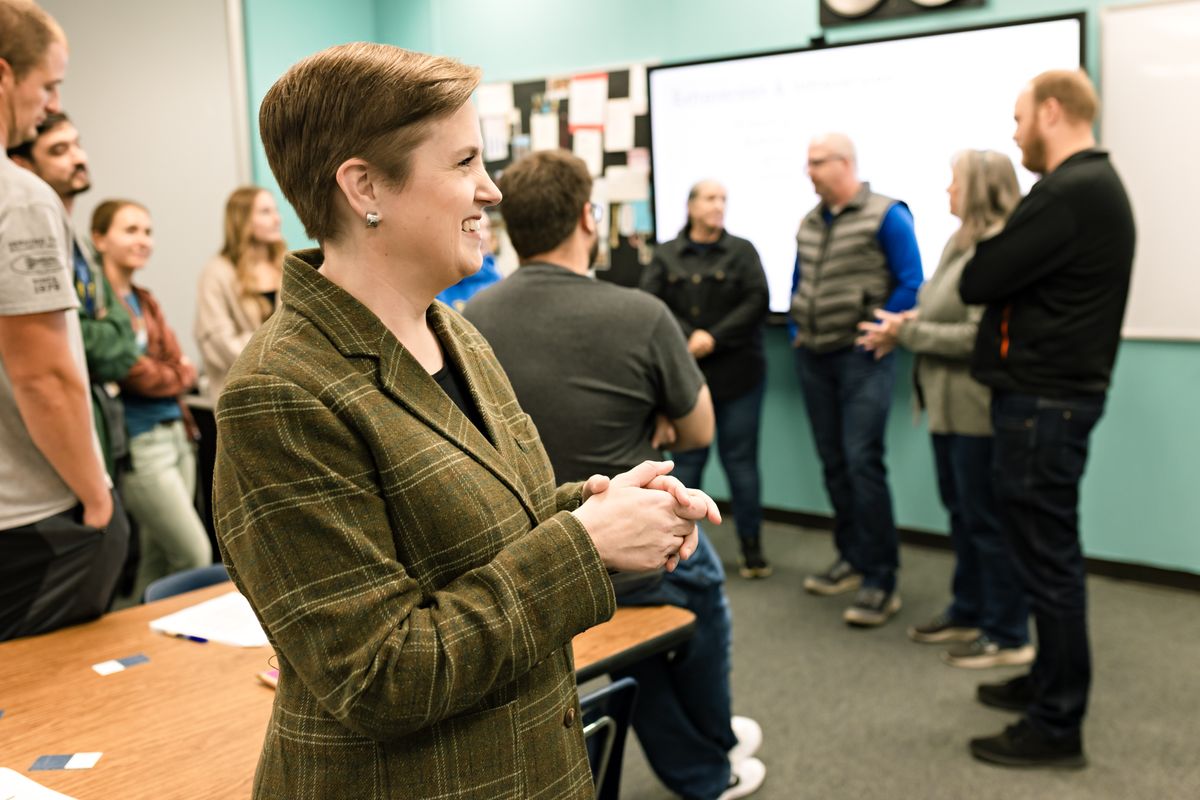
Those moments can be far more meaningful than simply explaining a personality framework.
People aren't just learning about differences. They're recognizing them in real time.
And that's where the learning starts to stick.
Are We Overlooking Some of Our Own Strengths?
I still think about my instructor's observation about Sensing being underrepresented in talent development, and it raises an interesting question.
Are we sometimes so focused on visionary thinking that we overlook the value of careful observation?
We celebrate the person who comes up with an exciting new idea, but what about the person who remembers why a similar idea didn't work last time?
We recognize the leader who paints a compelling picture of the future, but what about the person who notices that half the team has interpreted that vision differently?
We value people who connect ideas across disciplines, but what about those who connect today's challenges to lessons learned through experience?
These aren't competing strengths. And they're certainly not exclusive to one personality preference.
But they all deserve recognition.
Especially in a profession that's supposed to help people recognize and develop their potential.
Sometimes Growth Starts With Noticing
My Sensing preference doesn't mean I don't enjoy thinking creatively or imagining what's possible. I absolutely do. But I often get there by starting with what's happening right in front of me.
Looking back over my career, I can see how often I've relied on that approach without giving it much thought.
The details I've noticed. The conversations I've remembered. The moments when bringing someone's own experience back into focus helped them see something differently.
What once felt like simply the way I worked, I now recognize as one of my greatest strengths.
And that's something I appreciate about the MBTI framework when it's used well. It helps us recognize the value in our own natural preferences while learning to appreciate perspectives that may be different from ours.
Because meaningful development isn't always about thinking bigger or looking further ahead.
Sometimes it's about noticing what's been right in front of us all along.
At Horizon Team Design, we help leaders and teams turn self-awareness and an appreciation of differences into better communication, stronger collaboration, and more effective ways of working.
What strengths might your team be overlooking?
Explore team and leadership development with Horizon Team Design