
Most organizations don't wait until something breaks to maintain their equipment, protect their technology, or manage financial risks.
But when it comes to developing people and teams, we often take a different approach.
Leadership development gets postponed until a manager is struggling. Team development becomes a priority when conflict starts affecting performance. And organizational development often enters the conversation when engagement scores drop or valued employees begin leaving.
I understand why. When budgets and calendars are tight, it's difficult to justify investing in something that doesn't appear to need attention.
But I've come to believe that some of the best opportunities for team development happen well before there's a recognizable problem.
Things can be going well and still be better
Over the years, I've had the opportunity to work with a wide variety of teams, from established leadership groups to cross-functional teams navigating new responsibilities and changing expectations.
And something I've noticed is that many of the teams that benefit from development aren't necessarily struggling.
They're made up of talented, capable people who are doing good work. They generally get along, meet their goals, and care about being successful together.
But that doesn't mean everything is working as well as it could.
Sometimes there are small communication challenges that have become part of the routine. People make assumptions about how their colleagues prefer to work or what they need from one another. Different approaches to decision-making create frustration, or a few team members end up taking on more than their share because that's simply how things have evolved.
None of these situations necessarily suggests a dysfunctional team. In fact, they're pretty normal parts of working with other people.
What interests me is how often those little frustrations can be improved once people have the opportunity to step away from their daily work and talk about them.
And when teams don't have that opportunity, those patterns tend to stick around, sometimes becoming more costly over time.
The costs that are harder to measure
We hear a lot about the financial impact of employee turnover, and for good reason. Recruiting, onboarding, and rebuilding institutional knowledge take time and money.
But I think there's another part of the equation that deserves more attention: the cost of everyday friction that never quite rises to the level of a crisis.
Think about how much time a team might spend clarifying miscommunications, revisiting decisions, duplicating efforts, or working around differences that haven't really been discussed.
Then consider the less visible effects. People may become less willing to offer ideas, ask questions, or raise concerns. Managers spend more time sorting through interpersonal challenges than supporting their teams' development. Work still gets done, but it takes more effort than it should.
Those costs can be difficult to quantify, especially when they're spread across a team or organization. That doesn't make them any less important.
There's also a clear connection to employee retention.
In a Gallup study of employees who voluntarily left their organizations, 42% said their manager or employer could have done something to prevent their departure. Another finding stood out to me: 45% reported that neither a manager nor another leader had proactively discussed their job satisfaction, performance, or future with the organization during the three months before they left.
Source: Gallup, 42% of Employee Turnover Is Preventable but Often Ignored
Of course, not every departure is preventable, and not every team challenge leads to someone leaving. But these findings are a reminder that opportunities to improve the employee experience can be missed when we're waiting for a more obvious indication that something is wrong.
What I've noticed about teams that make time for development
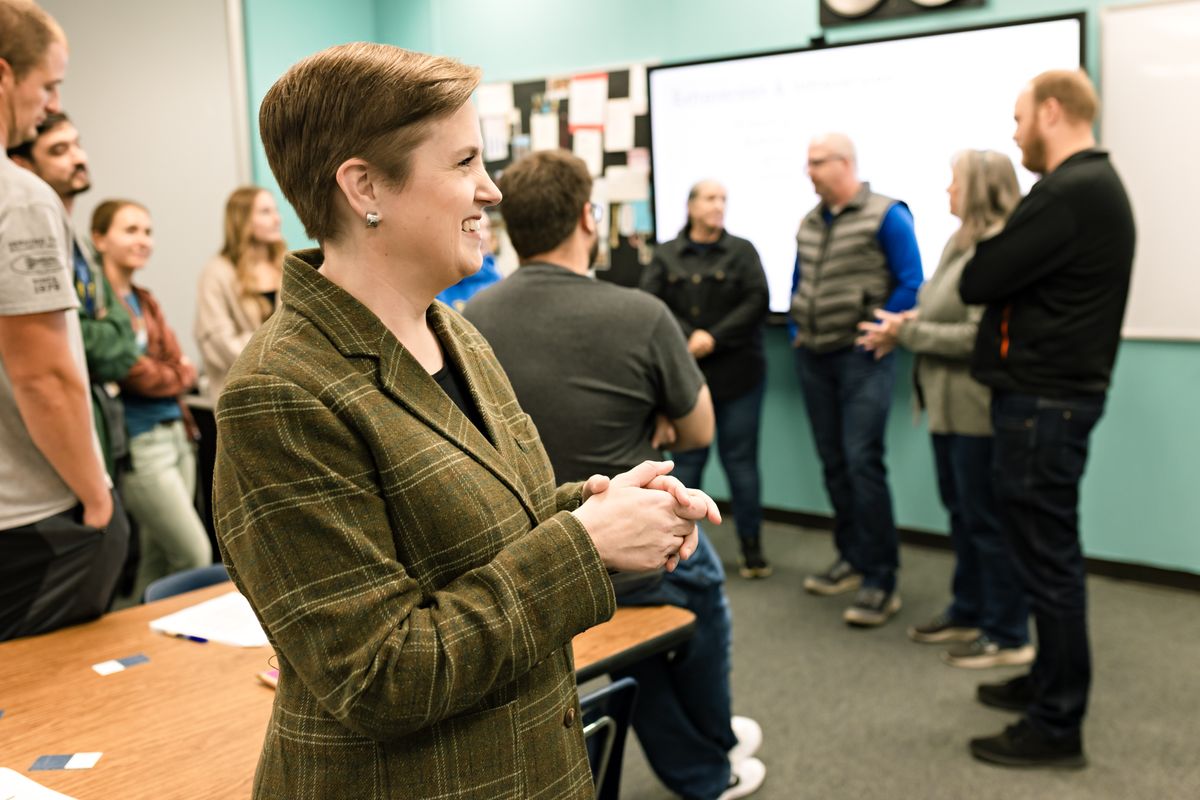
One of my favorite parts of facilitating team development is watching people make connections between what they're learning about themselves and what they experience with their colleagues.
Often, the discoveries are surprisingly simple.
Someone recognizes that a colleague's tendency to ask lots of questions isn't necessarily resistance; it may be their way of making sure they've considered all the details.
Or a team member realizes that someone who prefers to think things through before responding isn't disengaged. They just process information differently.
These are small shifts in understanding, but they can change how people interpret and respond to one another.
And that's where I think the real value of tools like the MBTI®, Everything DiSC®, and other development frameworks comes in.
The assessment results themselves aren't the end goal. They're a way to start conversations that might not otherwise happen.
I've found that even experienced, high-performing teams can benefit from taking time to explore how their individual strengths, preferences, and approaches fit together. Sometimes they uncover frustrations they hadn't really acknowledged. Other times, they identify strengths they could be using more intentionally.
Either way, they leave with a better understanding of one another and some practical ideas for working together.
We don't have to wait until relationships are strained or performance is suffering to make space for those conversations.
Making development part of how we work
When I talk about proactive organizational development, I don't mean trying to anticipate every possible challenge or creating a development program for the sake of having one.
I'm talking about making it a regular practice to pay attention to how people are working together, not just what they're accomplishing.
For leaders, that might mean checking in on communication and collaboration before frustrations build, making time for conversations about team expectations, or providing managers with development opportunities before they're overwhelmed by their responsibilities.
It also means recognizing that teams change. New people join, priorities shift, responsibilities evolve, and approaches that worked well a year ago may not be the best fit today.
Having the occasional opportunity to revisit how a team operates can make a real difference.
And these efforts don't have to involve a major, organization-wide initiative.
Sometimes starting with one leadership group or a team that's navigating change makes the most sense. A focused development experience can help people build shared understanding, identify practical improvements, and establish habits they can continue using long after the session ends.
In my experience, those everyday changes are often where the greatest value lies.
There's more to gain than avoiding problems
I think one of the limitations of treating organizational development as a response to dysfunction is that it overlooks what development can offer teams that are already doing well.
Better communication doesn't just reduce misunderstandings. It can help people share ideas more freely.
Greater awareness of individual differences doesn't just prevent conflict. It can help teams make better use of the perspectives and strengths already in the room.
Clearer expectations and stronger working relationships don't just make problems easier to manage. They can make collaboration more productive and enjoyable in the first place.
At Horizon Team Design, that's a big part of what I hope to help organizations accomplish.
After years of working with people across different industries, roles, and organizational cultures, one thing continues to stand out to me: most people genuinely want to work well together. But even the best intentions don't automatically make collaboration easy.
Sometimes people simply need the opportunity, the right tools, and a little outside perspective to see where things could work better.
And I'd much rather help a team discover those opportunities while things are going well than wait until they're trying to recover from something that could have been addressed earlier.
Don't wait for a reason to invest in your team
If your team is doing well, that's a great place to start.
What are you doing that's working? Where could things be a little easier? What strengths or opportunities might you be overlooking?
Those questions are worth asking even when there isn't a pressing problem to solve.
Because the value of proactive team development isn't just in what it helps us avoid. It's also in what it makes possible.
The best time to strengthen a team is before it reaches a crisis.
If you're thinking ahead about leadership development, organizational health, or ways to help your teams work more effectively together, I'd welcome a conversation.